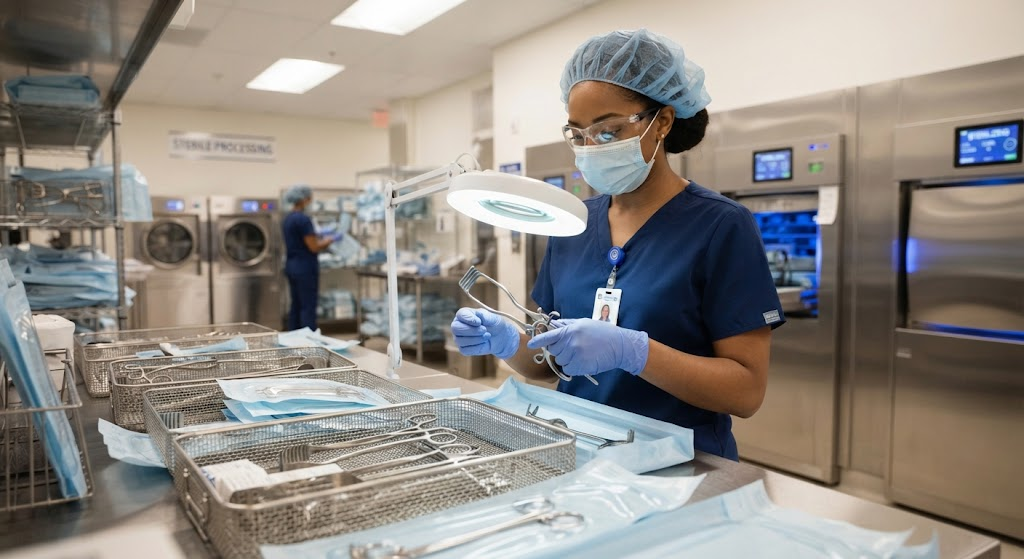

Stepping into healthcare as a sterile processing tech is an amazing way to build a secure, exciting career that changes lives every single day. If you want a job where you can easily rank high and find success, this role is a hidden gem. Hospitals and clinics in the USA urgently need skilled workers who keep surgical tools safe, clean, and ready for action. You play a vital role behind the scenes. Without your careful hands, doctors cannot perform life-saving operations safely. It is a rewarding path with steady hours, great pay, and wonderful chances to grow. Let us explore how you can master this important job and shine bright in the American healthcare field today.
What Does a Sterile Processing Tech Actually Do?
As a dedicated sterile processing tech, your main job is to handle, clean, test, and wrap surgical instruments before doctors use them on patients. You work hard in the heart of the hospital to stop germs and dangerous infections from spreading. Every single tool, from tiny scissors to massive metal clamps, passes through your careful hands. You check every item for damage and make sure it works perfectly. Your daily routine keeps patients safe and helps surgery teams do their jobs smoothly. It is a hands-on career where precision and sharp focus matter more than anything else.
Why Choose This Career in the USA?
Choosing to become a sterile processing tech in the USA opens doors to endless job security and rapid career growth. Healthcare facilities across the country face a massive shortage of trained professionals who can manage surgical equipment safely. Because hospitals always run surgeries day and night, your skills will always be in high demand from coast to coast. Plus, the training takes much less time than nursing or medical school. You can finish your studies, pass your exams, and step right into a paying job in just a few short months. It is truly a smart choice for a bright future.
Essential Daily Duties on the Job
Every single shift as a sterile processing tech brings exciting new tasks that keep you active and engaged. Your day usually starts in the decontamination area where you wash dirty tools using special advanced machines and safe cleaning solutions. Next, you move to the assembly room where you inspect, count, and organize instrument trays with incredible care. After that, you place the trays inside powerful sterilizers like steam autoclaves to kill every last germ. Finally, you store the sterile kits safely. Your hard work ensures every surgical team gets the exact right tools right on time.
How to Get Certified and Trained
Starting your journey as a sterile processing tech begins with finding a good training program at a local community college or trade school. These classes teach you basic medical terminology, human anatomy, and the exact rules for cleaning hospital equipment safely. After finishing your classes, you must pass a national certification exam to prove your amazing skills to top employers. Organizations like CBSPD and IAHCSMM offer the most trusted credentials in the United States. Having a valid certificate makes you stand out instantly and proves you are a true expert ready to protect patients.
Required Skills for Amazing Success
To thrive as a sterile processing tech, you need a wonderful mix of sharp attention to detail and strong physical stamina. You will spend a lot of time on your feet, lifting heavy trays and checking tiny parts for microscopic dirt or damage. Great communication skills also matter a lot because you must talk clearly with nurses and surgeons every day. Being organized helps you manage your time wisely when many surgical teams ask for tools at the same time. If you love solving puzzles, staying calm under pressure, and helping others, you will love this job.
Understanding Salaries and Job Growth
Getting hired as a sterile processing tech in the USA comes with wonderful pay and fantastic job benefits. Most hospitals and surgery centers offer steady hourly wages, health insurance, and paid time off to keep their workers happy. Salaries often go up as you gain more experience or earn advanced specialty certifications in surgical instrumentation. The job market is growing much faster than average across American states, meaning you can easily find work wherever you choose to live. It is a stable profession that truly rewards your dedication and hard work with financial peace of mind.
A Day in the Life of a Professional
Walking into work as a sterile processing tech means stepping into a fast-paced, high-energy environment where teamwork rules the day. You put on your protective gear, greet your friendly coworkers, and check the daily surgery schedule to see which tools are needed first. Throughout your shift, you balance heavy cleaning tasks with precise instrument packaging and quality checks. Time flies by quickly because every task directly helps heal a patient in need. At the end of the day, you leave work feeling proud knowing your clean instruments helped save lives and keep the hospital running safely.
Overcoming Common Workplace Challenges
Working as a sterile processing tech can sometimes bring tough moments, like dealing with tight surgery schedules or heavy equipment loads. When multiple emergency surgeries happen at once, you have to stay calm, think fast, and prioritize your tasks wisely. Wearing heavy protective gear like gloves, masks, and gowns can also feel warm and tiring during long shifts. However, taking short water breaks and leaning on your supportive team makes handling these hurdles much easier. Every challenge you beat helps you grow stronger, smarter, and more confident in your amazing medical career.
Top Tips to Advance Your Career
If you want to move up quickly as a sterile processing tech, never stop learning about new medical technology and advanced sterilization methods. Many hospitals offer tuition help or special bonuses if you earn extra certifications in orthopedic instruments or flexible endoscopes. Building strong, kind relationships with your nursing managers and department directors also opens doors to lead technician or supervisor roles. Showing up on time with a positive attitude makes you a natural leader that everyone trusts. Your ambition combined with your hard work will take you as far as you want to go.
Summary Table of Key Details
| Feature | Details for Success |
| Focus Keyword | Sterile Processing Tech |
| Training Time | 4 to 12 months |
| Key Certifications | CBSPD (CRCST) or IAHCSMM (CHL/CRCST) |
| Work Environment | Hospitals, Ambulatory Surgery Centers, Clinics |
| Primary Tasks | Decontamination, Assembly, Sterilization, Storage |
| Average USA Salary | Competitive hourly pay with full benefits |
| Job Outlook | High demand and fast growth nationwide |
Frequently Asked Questions
What is the role of a sterile processing tech?
A sterile processing tech cleans, tests, wraps, and sterilizes medical and surgical instruments to ensure they are completely safe for patient use in hospitals.
How long does it take to become certified?
Most training programs and hands-on clinical hours take anywhere from four months to one year to complete before you take your national exam.
Do I need a college degree for this job?
No college degree is required, but you do need a high school diploma, specialized training, and a recognized national certification to get hired easily.
What are the working hours like?
Hospitals operate around the clock, so shifts as a sterile processing tech can include days, nights, weekends, holidays, and on-call rotation schedules.
Is this a good career for job security?
Yes, because surgeries happen every day in the USA, skilled professionals who clean surgical tools will always enjoy incredible job security and steady demand.
How much money can I make in the USA?
Salaries vary by state and experience, but most professionals earn a reliable hourly wage with full healthcare benefits and opportunities for overtime pay.
Conclusion
Embracing a future as a sterile processing tech is one of the smartest, most rewarding career moves you can make today in the USA. You gain a stable job, respect from medical teams, and the joy of keeping patients safe during their most vulnerable moments. Take the first brave step by researching local training programs or signing up for a certification course this week. Your dedication will build a wonderful life for you and bring healing to countless others. Jump in, work hard, and watch your amazing healthcare career soar to incredible new heights!