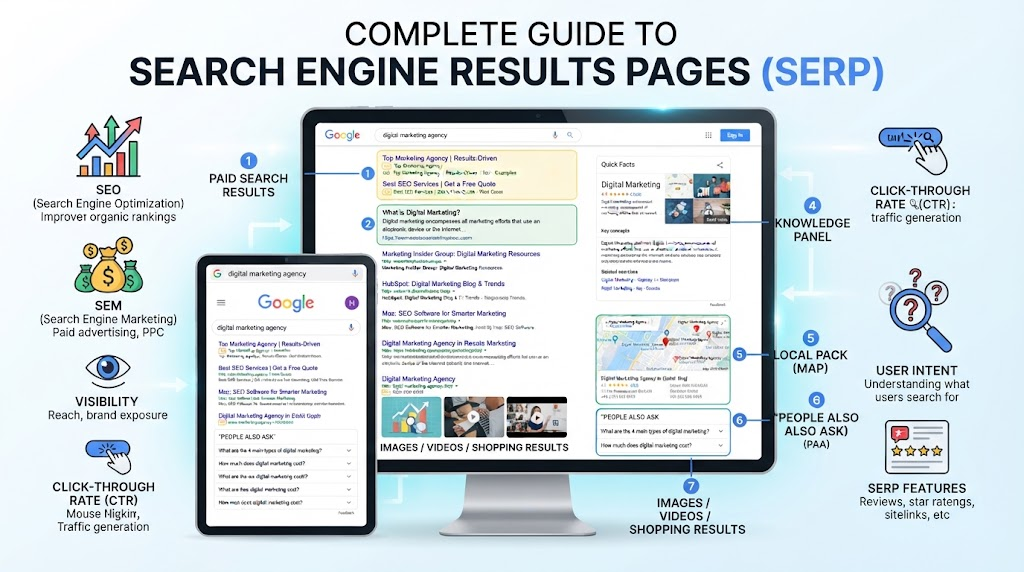

Have you ever wondered what happens when you type a question into Google? You press enter, and instantly, a full page of answers appears on your screen. That page is called a SERP, which stands for Search Engine Results Page.
Whenever you look for a quick recipe, local store hours, or fixing advice, the SERP delivers the answer. For business owners, bloggers, and online stores, winning a top spot on this page can bring thousands of fresh visitors every day. In this beginner guide, we will break down how search results pages work, why they matter, and how you can easily climb to the top!
What Does SERP Mean in Search Engine Optimization?
In simple terms, a SERP is the screen you see after typing words into a search bar. Search engines create these pages using complex mathematical formulas called algorithms. The primary goal is to show you the best, most helpful answers in a fraction of a second.
For website owners, understanding how this page works is the heart of Search Engine Optimization (SEO). When your pages match what people search for, Google awards you a higher position on the page. Higher positions mean more eyes on your content, which leads to more reader trust and sales!
Understanding Organic Search Results versus Paid Advertisements
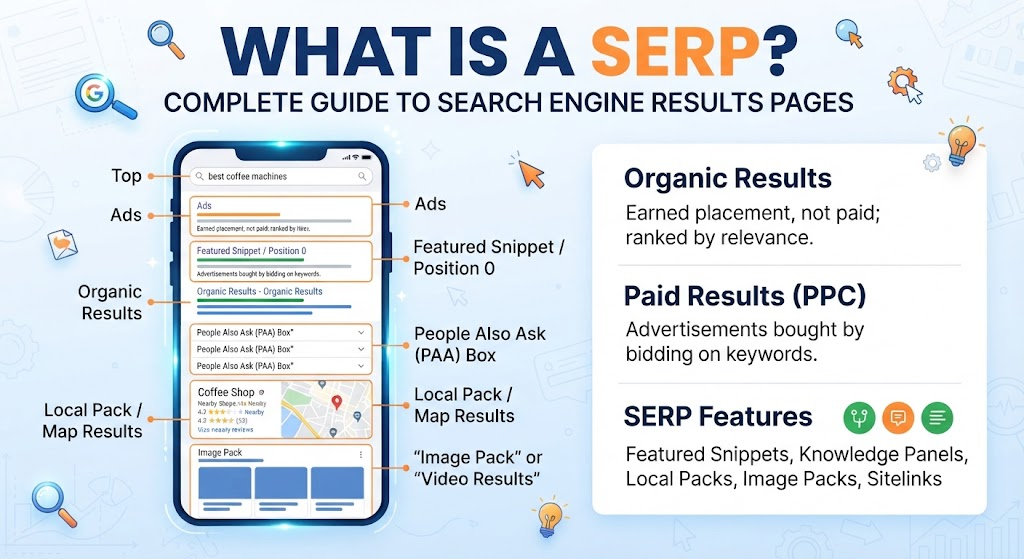
When you look closely at a search engine result page, you will spot two main types of listings: organic links and paid search ads.
- Paid Search Ads: These usually show up at the very top or bottom of the screen with a small label. Companies pay money to place their links here whenever someone searches for specific phrases.
- Organic Search Results: These listings appear naturally based on quality, trust, and relevance. You cannot pay Google to get an organic ranking. Instead, you earn these spots by creating helpful, accurate articles that genuinely solve problems for readers.
What Are SERP Features and How Do They Work?
Years ago, search result pages only contained 10 simple blue links. Today, search engine algorithms use rich visual elements to give people fast, accurate answers directly on the screen. These unique visual elements are known as SERP features.
Features can include recipe photos, short video clips, direct store directions, or definition boxes. When your content gets selected for these special placements, your website stands out instantly above normal text links, helping you capture immediate attention!
Biography & Snapshot Table: The SERP at a Glance
| Attribute | Details & Quick Information |
| Full Term Name | Search Engine Results Page (SERP) |
| Primary Function | Displays answers, links, and rich media for user web searches |
| Main Component Types | Organic listings, Paid Search Ads, and Featured SERP Snippets |
| Core Goal for Publishers | Earn high search engine visibility to attract free organic web traffic |
| Key Ranking Factors | Content quality, helpfulness, page speed, backlinks, and mobile usability |
| Primary Search Engine | Google (handling over 90% of global web searches) |
Unlocking Position Zero with Featured Snippets
A Featured Snippet is a highlighted box that appears at the very top of organic results, often called “Position Zero”. Google pulls a concise paragraph, numbered list, or chart directly from a trusted website to answer a user question right away.
To win a featured snippet spot, you should clearly answer common questions in your writing. Use bold headings, bullet points, and concise explanations under 50 words right after a clear header. When Google sees that your direct answer gives real value, it lifts your site above standard search positions!
How People Also Ask Boxes Help Content Creators
Have you noticed the expandable drop-down questions while scrolling through search pages? That section is called People Also Ask (PAA). It displays closely related queries that other searchers frequently type into Google.
▼ What is a SERP?
└─ A SERP is a Search Engine Results Page shown by Google…
▼ Why is SERP important for SEO?
▼ How can I rank higher on Google SERP?
This feature is a hidden goldmine for research! By clicking through PAA questions, you can see what your audience is curious about. Adding these exact questions as subheadings (H2 or H3 tags) inside your articles makes your content more relevant, helpful, and likely to rank!
Explaining Knowledge Panels and Local Map Packs
When you search for a major business, public figure, or local coffee shop, special cards appear on the page:
- Knowledge Panels: These clean summary boxes show up on the right side of desktop screens. They gather key facts, history, social links, and images about companies or famous people.
- Local Pack (Map Pack): If you search for “pizza near me” or local services, Google shows a map alongside three top local listings. This feature displays addresses, opening hours, star ratings, and contact numbers. Keeping your Google Business Profile updated is crucial for local customer traffic.
Why Search Intent is the Secret to Ranking High
Search intent means the underlying reason why someone searches for a phrase online. Google works hard to figure out what users want, dividing search intent into four core categories:
- Informational: Looking to learn something (e.g., “how to fix a leaky faucet”).
- Navigational: Trying to find a specific website (e.g., “YouTube login”).
- Commercial: Comparing options before buying (e.g., “best budget laptops”).
- Transactional: Ready to purchase right now (e.g., “buy running shoes size 10”).
If your article targets a transactional term with a long history essay, searchers will leave quickly. Always match your article style to what users expect on the search results page!
Simple Ways to Build Trust with E-E-A-T Principles
Google prioritizes content that demonstrates E-E-A-T, which stands for Experience, Expertise, Authoritativeness, and Trustworthiness. Search engines want to ensure readers get safe, accurate advice from real people.
You can build high E-E-A-T by sharing personal stories, real hands-on testing, and clear author bios. Cite credible sources, update old posts regularly, and make your contact details easy to find. Showing real expertise earns Google’s trust and builds long-term authority in your niche!
How AI Overviews and Modern Updates Impact Search
Search engines constantly evolve to serve readers faster. Modern updates include AI Overviews, which create friendly text summaries directly at the top of search results pages.
These AI-generated summaries gather insights from top web pages to give quick answers. To stand out in an AI-driven search world, focus on creating deep, original content filled with personal experience, unique graphics, and clear data. Helpful, human-first writing naturally wins placement across modern SERP placements!
Step-by-Step Checklist to Optimize Your Web Content
Climbing the organic rankings on a SERP requires a clean, organized plan. Follow this easy checklist whenever you write a fresh post:
- Pick One Primary Topic: Research a clear main phrase using free search tools.
- Write Short Sentences: Keep sentences under 18 words for fast readability.
- Organize with Headings: Break up text using descriptive H2 and H3 subheadings.
- Add Alt Text to Images: Describe your photos so search engines can read them.
- Ensure Fast Page Load Speeds: Compress images to help pages load quickly on mobile devices.
- Include Clear Schema Markup: Use structured data to help Google show rich snippets.
Conclusion: Start Winning Top Search Rankings Today
Understanding how the modern SERP works is the most powerful tool in your digital marketing strategy. By focusing on search intent, writing direct answers, and organizing your pages with clean headings, you can earn top placements that bring consistent traffic.
SEO is a ongoing journey, not a overnight event! Pick one old article on your blog today, refresh it using these helpful search strategies, and watch your positions climb.
What is your biggest goal for your website search rankings this year? Drop a comment below and share your thoughts!
Frequently Asked Questions (FAQs)
What does SERP stand for in digital marketing?
SERP stands for Search Engine Results Page. It is the page displayed by Google, Bing, or Yahoo after a user submits a search query.
Why are SERP rankings so important for websites?
Higher rankings place your link near the top of search pages, making searchers far more likely to click your website. Top organic positions drive free, highly targeted visitor traffic.
How do Featured Snippets differ from organic search results?
Standard organic results appear as traditional blue text links. A Featured Snippet is an answer box positioned at the top of the page that highlights a direct text answer, list, or table pulled from a site.
Can I pay search engines to rank higher organically?
No, you cannot pay Google for higher organic rankings. Organic spots are strictly earned by publishing high-quality, helpful content that satisfies user search intent.
What is the difference between desktop and mobile SERPs?
Desktop and mobile pages can look different. Mobile search results focus heavily on local maps, visual image carousels, and location-based answers because phone users often seek instant nearby help.
How often do Google search result pages change?
Google updates its search algorithms daily to refine results. As a result, page layouts, featured snippets, and top organic rankings can fluctuate frequently over time.