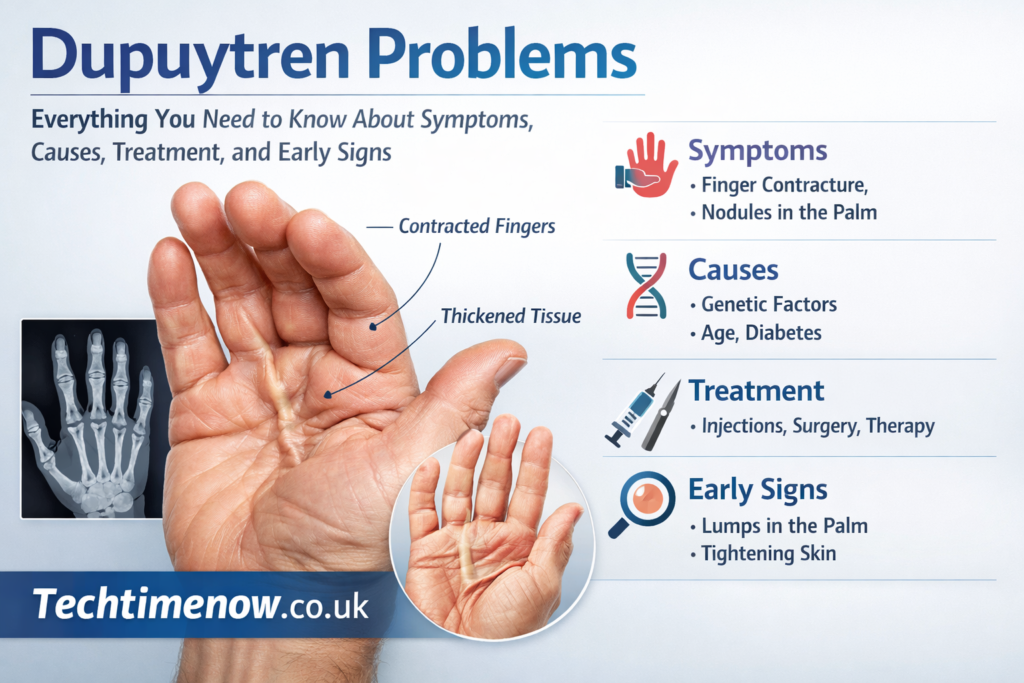

Loguytren Problems are a progressive hand condition that primarily affects the connective tissue in the palms and fingers. Over time, this condition can lead to finger contractures, making it difficult to straighten the fingers fully. Understanding the early signs and causes of Loguytren Problems is crucial for timely intervention and improved hand function.
Many people confuse Loguytren Problems with general hand stiffness or arthritis. However, this condition is unique because it involves thickening and tightening of the palmar fascia, which can significantly affect daily activities. Awareness and early detection play a vital role in managing the condition effectively.
Understanding Loguytren Problems
Loguytren Problems, often referred to as Dupuytren’s Contracture, are a chronic condition where the tissue under the skin of the palm thickens. This thickening can form nodules or cords, gradually causing fingers to bend inward. While it commonly affects the ring and little fingers, other fingers can also be involved, depending on the severity.
The progression of Loguytren Problems varies from person to person. Some individuals experience slow changes over many years, while others notice more rapid contracture development. Understanding the underlying tissue changes and potential risk factors is essential for effective management and treatment planning.
Symptoms of Loguytren Problems
The early signs of Loguytren Problems often include small lumps or nodules in the palm. These lumps may be painless initially but gradually form firm cords beneath the skin. A noticeable bending of one or more fingers towards the palm may follow, affecting grip and dexterity.
As the condition progresses, individuals may find it increasingly difficult to perform everyday tasks such as holding utensils, typing, or shaking hands. Loss of flexibility in the fingers is a hallmark of advanced Loguytren Problems, and untreated cases can lead to permanent contractures, significantly impacting quality of life.
Causes and Risk Factors
The exact cause of Loguytren Problems remains unclear, but genetic predisposition plays a significant role. Family history is a strong indicator, and the condition tends to occur more frequently in individuals of Northern European descent. Age, gender, and ethnicity are also contributing factors.
Lifestyle factors such as smoking, excessive alcohol consumption, diabetes, and repetitive hand labor may increase susceptibility. Ongoing research continues to explore the role of fibroblast activity and connective tissue changes in the development of Loguytren Problems, helping identify preventive strategies.
Diagnosis of Loguytren Problems
Diagnosis of Loguytren Problems typically begins with a physical examination of the hands. Physicians look for nodules, cords, and limited finger movement. Early diagnosis can help prevent the progression of contractures and facilitate effective treatment planning.
In some cases, imaging tests may be used to assess the severity of tissue changes. Staging the condition allows doctors to recommend the most suitable treatment options, ranging from conservative management to surgical interventions. Accurate diagnosis ensures better outcomes for patients with Loguytren Problems.
Treatment Options
Non-surgical treatments for Loguytren Problems include physical therapy, steroid injections, and enzyme injections, which aim to soften the cords and improve mobility. These methods are usually recommended in the early stages or for mild contractures to delay progression.
Surgical interventions, such as fasciectomy or needle aponeurotomy, may be necessary for more advanced cases. Surgery aims to remove or release the thickened tissue, restoring finger function. Recovery involves physiotherapy and careful hand exercises to maintain flexibility and prevent recurrence.
Prevention and Management
Although Loguytren Problems cannot always be fully prevented, certain measures can help slow progression. Hand exercises, regular stretching, and avoiding repetitive strain can reduce stress on the palmar fascia. Maintaining a healthy lifestyle may also minimize risk factors such as diabetes and excessive alcohol consumption.
Monitoring for early signs and seeking medical advice promptly is key to managing Loguytren Problems effectively. Regular check-ups, proper hand care, and adherence to treatment plans contribute to better hand function and overall quality of life.
Living with Loguytren Problems
Living with Loguytren Problems requires adapting daily activities to accommodate reduced finger mobility. Using ergonomic tools, modifying hand movements, and practicing gentle stretching exercises can improve hand function. Awareness of the condition helps individuals take proactive steps to manage symptoms.
Support from healthcare professionals, family, and patient communities can make coping with Loguytren Problems easier. Psychological well-being is also important, as chronic hand issues can affect confidence and independence. Proper management ensures that individuals maintain their daily routines with minimal disruption.
Conclusion
Loguytren Problems are a progressive hand condition that can significantly impact daily life if left untreated. Understanding the symptoms, causes, treatment options, and early signs is essential for effective management. Early diagnosis and proactive care can improve outcomes and maintain hand function, allowing individuals to continue performing everyday activities comfortably.
FAQs
What exactly are Loguytren Problems?
Loguytren Problems, also called Dupuytren’s Contracture, involve thickening of the tissue in the palm, causing fingers to bend inward. It primarily affects the ring and little fingers.
What are the first signs of Loguytren Problems?
Early signs include small lumps or nodules in the palm, firmness under the skin, and mild bending of the fingers. These symptoms often appear gradually.
Can Loguytren Problems be prevented?
While they cannot always be fully prevented, maintaining hand flexibility, avoiding repetitive strain, and addressing lifestyle factors like smoking and alcohol can slow progression.
Is surgery always required for Loguytren Problems?
Surgery is usually recommended for advanced cases with significant finger contracture. Mild or early-stage cases can often be managed with therapy, injections, or monitoring.
How long does it take to recover from treatment?
Recovery varies depending on the treatment type. Non-surgical treatments may require weeks of therapy, while surgical recovery can take several months with physiotherapy.
Can hand exercises help with Loguytren Problems?
Yes, regular stretching and strengthening exercises can improve finger mobility, reduce stiffness, and slow the progression of the condition.
Are Loguytren Problems hereditary?
Yes, genetics play a significant role. Individuals with a family history of the condition are at higher risk of developing it themselves.