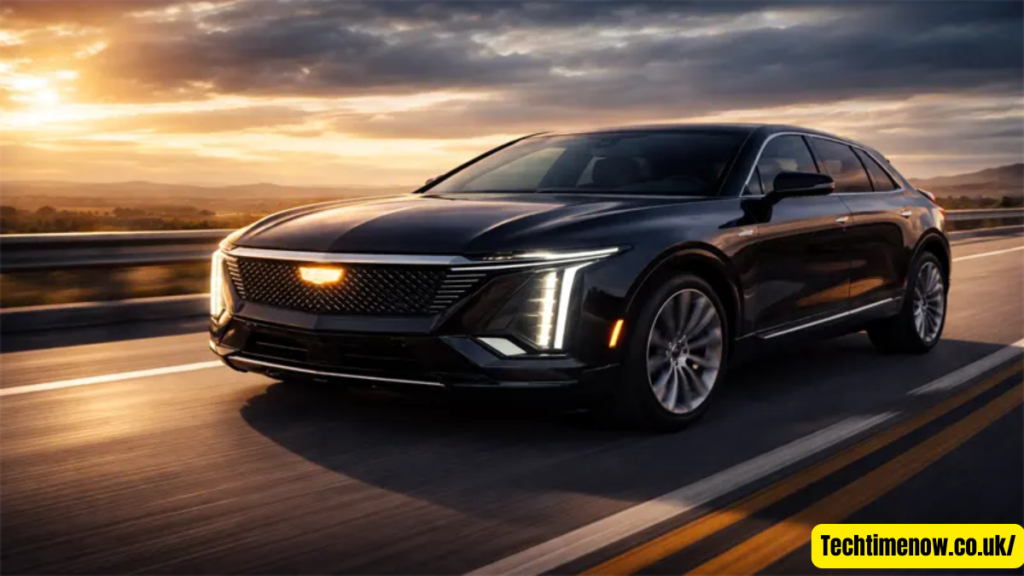

Electric vehicles have transformed how drivers think about performance, efficiency, and control. Instead of gears and engine tuning, modern EVs rely on software-defined experiences that adapt power delivery, regenerative braking, and climate behavior. Among luxury electric SUVs, the Cadillac Lyriq stands out for combining premium comfort with intelligent driving customization.
A common question from buyers and enthusiasts alike is: do the driving modes in cadillac lyriq offer different ranges or battery usages? The answer is more nuanced than a simple yes or no. Driving modes influence energy consumption indirectly through responsiveness, torque delivery, and driver behavior, shaping real-world range in ways many owners don’t initially expect.
Understanding Driving Modes in Modern Electric Vehicles
Electric vehicles rely on software control systems rather than mechanical tuning to alter driving behavior. Instead of changing engine mapping or transmission logic, EV driving modes adjust throttle sensitivity, regenerative braking strength, steering feel, and climate efficiency profiles simultaneously.
When people ask whether do the driving modes in cadillac lyriq offer different ranges or battery usages, they are really asking how software changes energy flow. Each mode subtly alters how quickly power is delivered and recovered, influencing consumption patterns without physically changing the battery itself.
Overview of Cadillac Lyriq Driving Modes
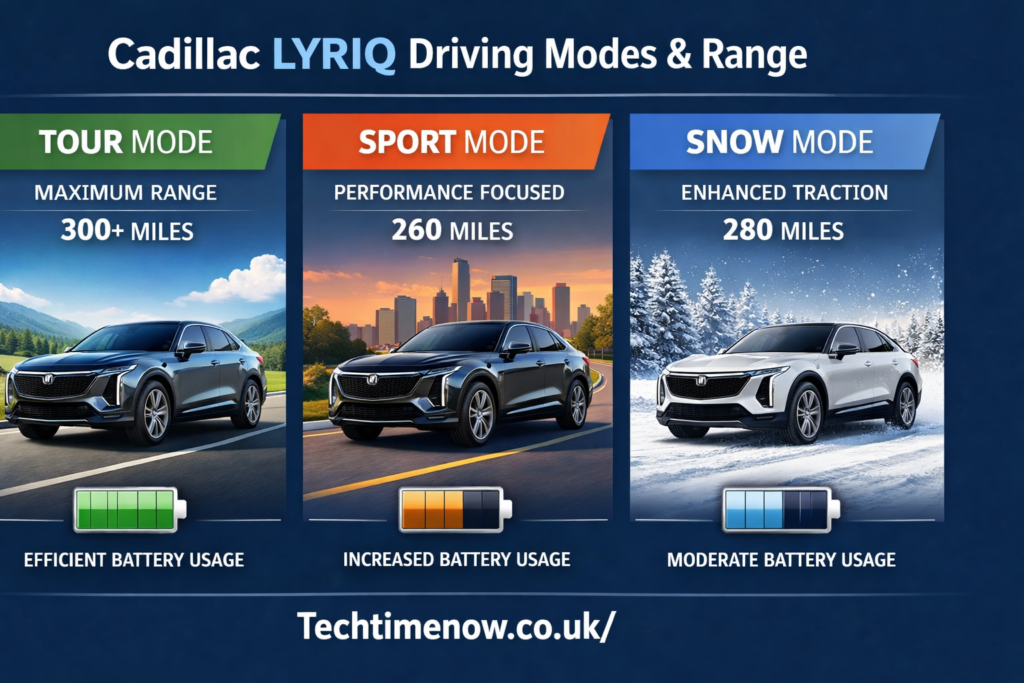
The Lyriq provides multiple selectable driving modes designed for different environments and driver preferences. Typical configurations include Tour, Sport, Snow/Ice, and customizable My Mode settings that allow drivers to tailor steering and responsiveness.
These modes exist to balance comfort and efficiency rather than create entirely separate powertrains. Understanding whether do the driving modes in cadillac lyriq offer different ranges or battery usages requires examining how these profiles affect acceleration habits, regenerative braking, and traction management in everyday driving.
How Software Controls Energy Consumption
Electric SUVs operate through complex algorithms managing torque output and battery discharge rates. Instead of restricting energy directly, driving modes influence how aggressively power is requested from the battery during acceleration or hill climbing.
This means the question do the driving modes in cadillac lyriq offer different ranges or battery usages depends largely on driver interaction. Softer throttle mapping encourages gradual acceleration, which naturally reduces energy draw and extends effective driving distance.
The Role of the Ultium Battery Platform
The Lyriq is built on the Ultium architecture developed by General Motors, designed for scalable efficiency and thermal management. This platform maintains consistent battery health regardless of mode selection.
Driving modes do not physically change battery capacity or chemistry. Instead, they modify how efficiently stored energy is used, which explains why drivers sometimes perceive range differences even though the battery pack remains identical.
Tour Mode and Everyday Efficiency
Tour mode acts as the default setting, prioritizing comfort and balanced energy use. Acceleration response is smooth, climate control operates efficiently, and steering effort remains relaxed for long-distance travel.
In practical terms, Tour mode often delivers the most consistent range results. Drivers wondering do the driving modes in cadillac lyriq offer different ranges or battery usages often discover that Tour mode encourages efficient habits without feeling restrictive.
Sport Mode and Performance Behavior
Sport mode sharpens throttle response and increases torque immediacy, allowing the Lyriq’s electric motors to deliver faster acceleration. Steering feedback also becomes more responsive, creating a dynamic driving experience.
However, quicker acceleration typically increases energy consumption. While the battery itself does not change, aggressive power delivery means drivers may experience reduced real-world range, reinforcing why driving mode selection matters in daily efficiency.
Snow and Ice Mode Energy Management
Snow/Ice mode adjusts traction control and softens torque delivery to prevent wheel slip on low-grip surfaces. Power is applied gradually, ensuring stability rather than speed.
Interestingly, this controlled output can sometimes improve efficiency during slippery conditions. Because energy spikes are minimized, drivers may notice steadier consumption despite harsher environmental factors.
My Mode Customization Explained
My Mode allows personalization of steering weight, acceleration feel, and braking regeneration. Drivers can essentially create a hybrid between comfort and performance profiles.
This customization directly connects to the question do the driving modes in cadillac lyriq offer different ranges or battery usages, because users can design a configuration that favors efficiency without sacrificing preferred handling characteristics.
Regenerative Braking Differences Between Modes
Regenerative braking converts kinetic energy back into stored battery energy during deceleration. Different modes adjust how aggressively regeneration activates when lifting off the accelerator.
Stronger regeneration can improve efficiency in stop-and-go traffic, while lighter regeneration creates smoother highway driving. The overall energy savings depend heavily on traffic patterns and driving style.
One-Pedal Driving and Energy Recovery
The Lyriq supports one-pedal driving, allowing drivers to slow the vehicle using regenerative braking alone. This system maximizes energy recapture during urban driving conditions.
When combined with efficient driving modes, one-pedal operation can noticeably extend range. The perceived battery usage difference comes from recovered energy rather than reduced battery capacity.
Climate Control Interaction With Driving Modes
EV climate systems consume significant energy, particularly in extreme temperatures. Some driving modes subtly optimize HVAC performance to reduce power draw during steady cruising.
While these adjustments are minor individually, they contribute to cumulative efficiency improvements. Over long journeys, climate optimization can meaningfully influence remaining range estimates.
Acceleration Mapping and Energy Demand
Acceleration mapping determines how quickly motor torque responds to pedal input. Sport mode amplifies responsiveness, while efficiency-focused settings smooth out power delivery.
Rapid acceleration demands higher instantaneous battery output, which increases consumption. Slower ramp-up curves reduce peaks in energy usage, indirectly improving driving efficiency.
Highway Driving Versus City Driving Impact
Driving modes influence efficiency differently depending on environment. City driving benefits more from regenerative braking adjustments, while highway travel depends on aerodynamic efficiency and steady power delivery.
As a result, drivers may notice minimal range differences between modes on highways but significant variations in urban traffic, highlighting the situational nature of energy consumption.
Steering Feel and Driver Behavior
Steering feedback might seem unrelated to battery usage, yet it affects driver confidence and behavior. Sportier steering often encourages dynamic driving, which increases acceleration frequency.
Behavioral changes like these explain why two drivers using identical modes can experience very different efficiency outcomes despite the same hardware configuration.
Real-World Range Versus EPA Estimates
Official range ratings are measured under standardized testing conditions. Real-world driving introduces variables like terrain, speed, temperature, and driving style.
Because driving modes influence these behaviors, they indirectly affect whether drivers achieve or exceed official range estimates during everyday use.
Energy Consumption Comparison Table
Driving modes alter multiple parameters simultaneously. The table below summarizes how each mode typically affects energy behavior.
| Driving Mode | Throttle Response | Regeneration Level | Comfort Priority | Typical Efficiency Impact |
| Tour | Moderate | Balanced | High | Most consistent range |
| Sport | Aggressive | Moderate | Medium | Higher energy use |
| Snow/Ice | Soft | Controlled | Stability | Stable consumption |
| My Mode | Adjustable | Adjustable | Custom | Depends on setup |
These differences help explain why do the driving modes in cadillac lyriq offer different ranges or battery usages is best answered through usage patterns rather than technical limitations.
Battery Thermal Management Across Modes
The Lyriq maintains optimal battery temperature using active thermal systems. These systems operate independently from driving modes to protect battery longevity.
Because temperature stability remains constant, driving modes do not degrade battery health. Energy variations arise from power demand rather than thermal inefficiency.
Torque Delivery and Instant Power Dynamics
Electric motors deliver instant torque, which is both an advantage and a potential efficiency challenge. Driving modes regulate how quickly this torque becomes available.
Limiting sudden torque spikes improves traction and efficiency simultaneously. Controlled output often results in smoother and more economical driving behavior.
Driver Psychology and Efficiency
Driving modes influence perception as much as mechanics. Sport mode psychologically encourages spirited driving, while comfort-focused modes promote calm operation.
This behavioral factor is one of the strongest explanations behind varying range outcomes among owners using identical vehicles.
Terrain Adaptation and Power Usage
Hill climbs require sustained power output regardless of mode. However, smoother acceleration mapping can prevent unnecessary energy spikes during elevation changes.
Efficient torque management ensures energy is used steadily rather than in bursts, helping preserve range on varied terrain.
Software Updates and Efficiency Improvements
Over-the-air updates allow manufacturers to refine efficiency algorithms long after purchase. Adjustments may improve regeneration tuning or power management strategies.
This evolving software ecosystem means driving mode performance can improve over time without hardware modifications.
Charging Strategy and Mode Selection
Driving mode choice also affects charging planning. More aggressive modes may require earlier charging stops during long journeys.
Efficiency-focused settings can extend intervals between charges, making route planning more flexible for road trips.
Cabin Comfort Versus Energy Savings
Luxury EVs prioritize comfort, and the Lyriq balances efficiency with premium experience. Some modes allow slightly higher energy usage to maintain quietness and ride refinement.
Drivers can choose whether comfort or efficiency takes priority depending on trip goals.
Range Prediction Algorithms
The vehicle’s range estimator adapts based on recent driving behavior. Switching modes can temporarily change predicted range values.
These fluctuations often lead drivers to believe battery usage itself has changed, when in reality predictive software is recalculating expectations.
Urban Stop-and-Go Efficiency
Frequent braking opportunities allow regenerative systems to shine in cities. Efficient modes paired with one-pedal driving maximize recovered energy.
In dense traffic, driving mode selection can significantly influence effective range outcomes.
Long-Distance Touring Efficiency
On highways, steady speeds reduce differences between modes. Aerodynamics and cruising speed become dominant factors.
Tour mode typically provides the best balance for extended journeys due to predictable energy demand.
Common Misconceptions About Driving Modes
Many assume driving modes physically limit battery output or capacity. In reality, they adjust responsiveness and recovery strategies.
Understanding this distinction clarifies why energy usage differences are behavioral rather than mechanical.
Expert Insight on EV Driving Modes
An EV systems engineer once summarized the concept clearly:
“Driving modes don’t change how much energy your battery holds — they change how easily you spend it.”
This perspective highlights how software design shapes efficiency through driver interaction rather than hardware alteration.
Future Trends in Adaptive Driving Modes
Future EV systems may automatically adjust modes using AI-based learning. Vehicles could optimize efficiency based on route history and driver habits.
Such developments will further blur the line between manual mode selection and automated efficiency management.
Conclusion
So, do the driving modes in cadillac lyriq offer different ranges or battery usages? Technically, the battery capacity remains unchanged across modes, but real-world energy consumption absolutely varies due to throttle mapping, regenerative braking behavior, and driver psychology.
The Lyriq demonstrates how modern EV efficiency is shaped less by mechanical limits and more by intelligent software and human interaction. Choosing the right mode for conditions can meaningfully influence range, comfort, and overall driving satisfaction.
FAQ
Do the driving modes in cadillac lyriq offer different ranges or battery usages in daily driving?
Yes, do the driving modes in cadillac lyriq offer different ranges or battery usages indirectly because each mode changes acceleration response and regeneration behavior, affecting real-world efficiency.
Which driving mode gives the best range in the Lyriq?
Tour mode typically delivers the most balanced efficiency because it encourages smoother acceleration and optimized energy recovery during normal driving.
Does Sport mode damage the battery faster?
No. Sport mode increases energy consumption but does not harm the battery, as thermal and safety systems manage power output automatically.
Is one-pedal driving better for battery efficiency?
Yes, especially in city conditions, because regenerative braking recovers energy that would otherwise be lost as heat during braking.
Should I switch modes on long trips?
Yes. Selecting an efficiency-focused mode during highway travel can help maximize range and reduce charging stops, depending on driving conditions.