
Introduction
Have you ever lost a tooth and wondered how dentists fix your smile? One of the most popular ways to replace a missing tooth is with a tiny metal post called a dental implant. But before people get one, they almost always ask one big question: do dental implants hurt? It is totally normal to worry about pain when it comes to your teeth. Nobody likes the sound of a drill or a needle!
However, modern dental care is much gentler than you might think. Dentists use special medicine to make sure you do not feel a thing while they work. In this article, we are going to explore the truth about do dental implants hurt. We will look at what happens during the procedure, how your mouth feels afterward, and what you can do to stay comfortable. By the end, you will see that getting a new tooth is not as scary as it sounds!
Table of Contents
1. Understanding Dental Implants: What Are They?
Before we talk about pain, let us understand what a dental implant actually is. Think of it like a tiny anchor for a fake tooth. When you lose a tooth, you lose the root underneath. A dentist places a small titanium post into your jawbone to act as a brand-new root. Over time, your bone grows around this post and holds it super tight.
Once the post is locked in place, the dentist attaches a connector and a shiny new tooth on top. This new tooth looks and acts just like a real one! You can chew your favorite foods, smile brightly, and talk without anyone noticing a difference. Understanding the parts of the implant helps you realize why the process takes time and care.
2. The Big Question: Do Dental Implants Hurt?
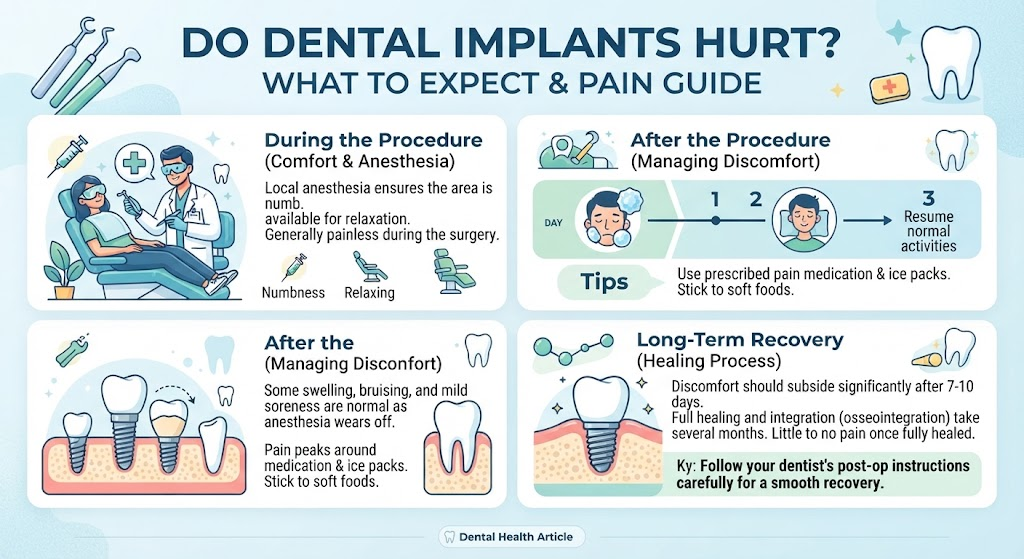
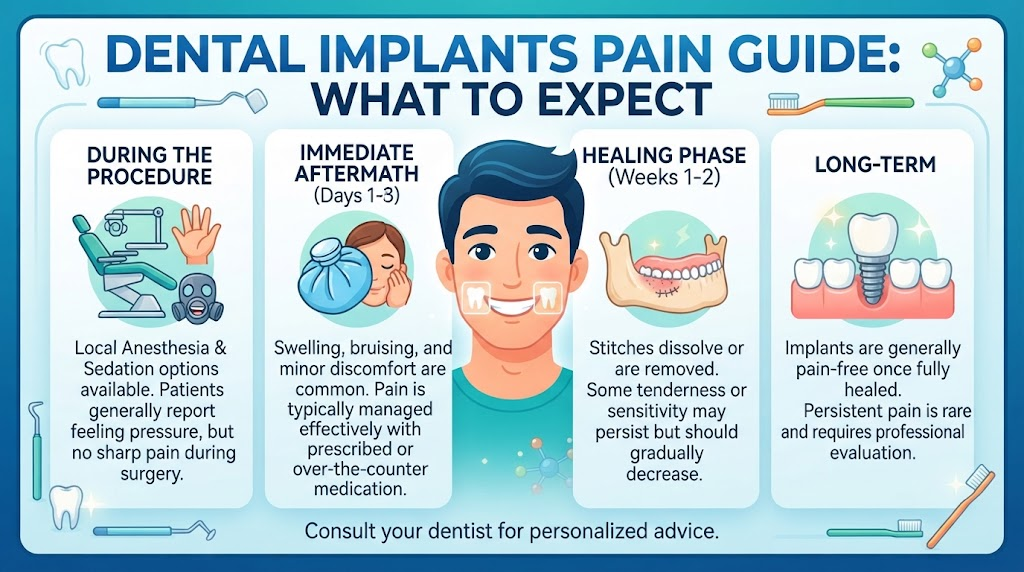
Let us answer the main question right away: do dental implants hurt while they are being placed? The short answer is no, they do not! Your dentist will use strong numbing medicine, called local anesthesia, to put your mouth to sleep. You might feel a little bit of pressure or gentle pushing, but you will not feel any sharp pain.
Many patients are surprised by how easy the actual appointment is. Dentists want you to feel relaxed and safe. If you ever feel nervous, you can always talk to your dentist about extra comfort options. They are there to help you every step of the way and make sure your experience is smooth and pain-free.
3. What Happens During the Procedure?
Curious about what goes on in the dentist’s chair? First, the dentist cleans the area and applies the numbing medicine. Once your gums and jaw are completely numb, they make a tiny space in your gum to reach the jawbone. Next, they gently place the metal post into the bone.
This whole process is done with great care and precision. Because you are numb, you will just hear some sounds or feel mild movement. The appointment usually goes by faster than you expect. Once the post is safely inside your jaw, the first big step of your smile journey is complete!
4. Feeling Numb: The Magic of Anesthesia
How do dentists stop you from feeling pain? The secret weapon is local anesthesia. This is a special liquid medicine that blocks pain signals from traveling to your brain. When the dentist places it with a tiny pinch, it makes your whole gum area feel heavy and numb.
For people who feel very scared, dentists can also use sedation medicine. This helps you sleep right through the appointment or feel super sleepy and calm. Because of these amazing medical tools, you do not have to worry about feeling hurt while the dentist works on your mouth.
5. What to Expect After the Numbness Wears Off
Once you go home and the numbing medicine wears off, you might wonder: do dental implants hurt later that day? It is normal to feel some mild soreness as your body begins to heal. Your jawbone and gums just went through a big change, so they need a little rest.
You might notice slight swelling in your cheek or mild tenderness around the spot where the post was placed. This feeling is very similar to what you might feel after losing a regular tooth or having a simple tooth pulled out. It is a normal part of healing and gets better very quickly.
6. Managing Post-Surgery Soreness Easily
Even though mild soreness can happen, it is very easy to manage at home. Your dentist will give you clear instructions on how to take care of your mouth. They might suggest taking regular over-the-counter medicine to keep you comfortable.
You can also use a cold ice pack on your cheek for a few minutes at a time to reduce swelling. Eating soft foods like yogurt, mashed potatoes, and smoothies will also keep your jaw happy. By following these simple tips, your recovery will be a breeze!
7. Comparing Implants to Other Dental Work
How does getting an implant compare to other dental procedures? Many people compare it to getting a tooth pulled, known as an extraction. Surprisingly, getting a dental implant often hurts less than having a bad tooth taken out because the area is already calm and treated carefully.
Root canals also have a reputation for being scary, but modern dental technology makes implants just as comfortable. When you look at the big picture, a little bit of temporary healing is totally worth it for a permanent tooth that lasts a lifetime.
8. Tips for a Fast and Smooth Recovery
Want to heal as fast as possible? Here are some golden rules for your recovery days. First, make sure you get plenty of rest so your body can repair itself. Avoid poking the new implant area with your tongue or fingers.
Drink plenty of water, but do not use a straw because the sucking motion can disturb the healing site. Keep up with gentle brushing, avoiding the exact spot until your dentist says it is safe. Taking these easy steps helps your mouth heal in no time!
9. Long-Term Benefits That Outweigh Temporary Soreness
When thinking about do dental implants hurt, it helps to remember the amazing long-term reward. A few days of mild soreness lead to a strong, beautiful smile that can last for decades. Unlike dentures that you take out at night, implants stay firmly in place.
They help keep your jawbone strong and healthy, preventing your face from changing shape as you get older. Eating your favorite crunchy apples and corn on the cob becomes fun again. The short healing time is a tiny price to pay for a lifetime of happy smiles!
10. When to Call Your Dentist
Most of the time, healing goes smoothly without any trouble. However, it is always smart to know when to ask for help. If your pain gets worse instead of better after a few days, or if you notice heavy bleeding, you should call your dentist right away.
Your dental team is always ready to answer your questions and check on your healing progress. Never feel shy about reaching out if something feels strange. They want to make sure your smile stays healthy and safe!
Frequently Asked Questions (FAQs)
1. Do dental implants hurt during the surgery?
No, they do not hurt during the procedure because your dentist uses strong numbing medicine to make sure the area is completely asleep.
2. How long does the soreness last afterward?
Most mild soreness and swelling go away within three to five days as your gums and jaw begin to heal.
3. Can I eat normally after getting an implant?
You should stick to soft foods like soup, yogurt, and mashed potatoes for the first few days, and slowly return to normal foods as you heal.
4. Are dental implants safer than other options?
Yes, dental implants are a very safe and popular choice because they replace the root of the tooth and last for many years.
5. What if I am scared of the dentist?
Be sure to talk to your dental team before your appointment. They can offer special sedation options to help you feel completely calm and relaxed.
6. Do dental implants look like real teeth?
Yes! The crown placed on top is custom-made to match the exact color, shape, and size of your natural teeth.
Conclusion
Getting a dental implant is a great way to fix your smile, and now you know the truth about do dental implants hurt! With modern numbing medicine, the procedure itself is comfortable and pain-free. While you might feel a little bit of mild soreness during the first few days of healing, it is easy to manage with rest and soft foods. If you are missing a tooth and thinking about getting an implant, why not schedule a friendly chat with your dentist today to ask your questions and start your journey to a brighter smile?